
TL;DR
Startup branding is more than a logo, it shapes how customers, investors, and the market perceive your business. This guide highlights seven common startup branding mistakes, including weak strategy, inconsistent branding, poor positioning, and generic messaging. It explains how these issues reduce trust, limit growth, and make customer acquisition harder.
You’ll also learn practical ways to strengthen your brand identity, improve user experience, and create a clear market presence. Startups that invest in strategic branding early build stronger customer loyalty, stand out from competitors, and scale more effectively.
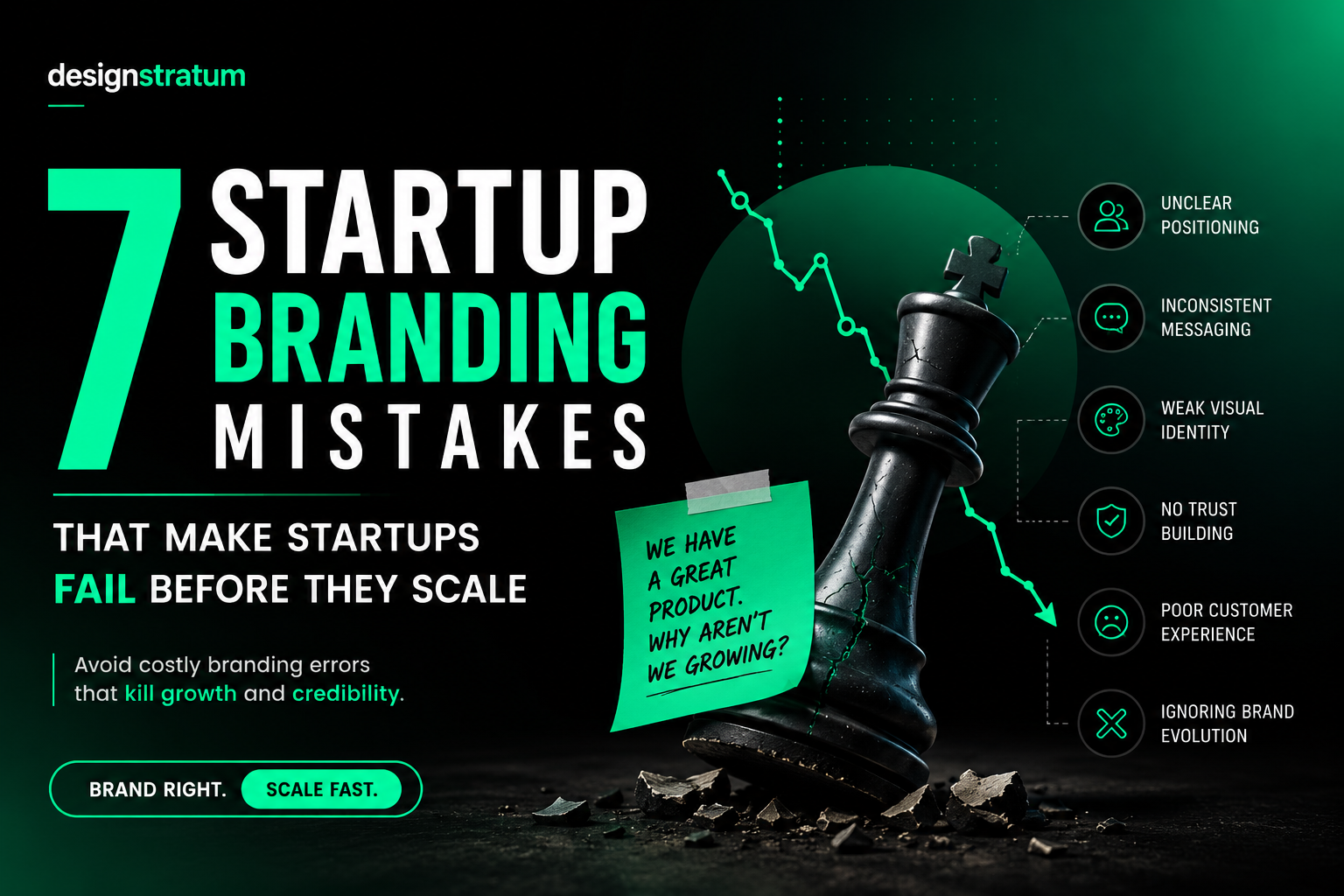
Many founders think branding is only a logo, but startup branding influences customer trust, recognition, and growth. Poor branding weakens credibility, customer acquisition, and market differentiation. This guide explores seven common branding mistakes that limit scalability and explains how startups can build a strong, memorable brand foundation.
Why Branding Matters for Startup Success
Startup branding is the process of creating a distinct identity that customers recognize and trust. It includes brand identity, brand strategy, messaging, positioning, customer experience, and visual design. A strong brand helps startups stand out in crowded markets and create meaningful connections with customers.
How Branding Influences Customer Perception
Customers often form opinions about a company within seconds. Your website, logo, messaging, and visual identity all contribute to that first impression. Strong branding communicates professionalism, reliability, and credibility.
When customers immediately understand what your startup does and why it matters, they are more likely to engage with your business. Furthermore, consistent branding creates familiarity, which strengthens trust over time. Effective startup branding influences not only perception but also buying decisions.
The Connection Between Branding and Business Growth
Branding directly impacts growth by making marketing more effective. Customers are more likely to remember brands that communicate clearly and consistently. As awareness increases, customer acquisition becomes easier and more cost-efficient.
Strong brand positioning also supports referrals and customer loyalty. Additionally, businesses with recognizable brands often achieve better conversion rates than competitors with weak branding. Growth becomes more sustainable when branding supports every stage of the customer journey.
Why Investors and Customers Care About Brand Identity
Investors look beyond products and revenue. They assess whether a startup has the potential to build long-term market value. A clear brand identity demonstrates focus, professionalism, and strategic thinking.
Customers also prefer businesses they trust. Strong branding reduces uncertainty and helps buyers feel confident in their decisions. Furthermore, a well-defined brand identity makes it easier for stakeholders to understand your company’s vision and purpose.
Mistake #1: Starting Without a Clear Brand Strategy
Many startups jump straight into designing logos and websites without creating a brand strategy. This approach often results in inconsistent messaging and weak positioning. Without a clear direction, branding efforts become reactive instead of intentional.
What a Brand Strategy Actually Includes
A brand strategy defines your startup’s foundation. It includes mission, vision, values, target audience, brand positioning, and brand promise that guide every business decision.
A strong strategy differentiates your startup from competitors. Furthermore, it creates consistency across marketing efforts and establishes a clear framework for sustainable growth.
Problems Caused by a Lack of Direction
Startups without a clear brand strategy struggle to communicate value effectively. Messaging becomes inconsistent, causing customer confusion and reducing trust in the business.
Poor alignment affects customer experiences and internal decision-making. Additionally, businesses waste resources on branding activities that fail to support long-term objectives.
How to Build a Strong Brand Foundation
Identify your purpose, target audience, and unique value proposition. Understand customer challenges and define how your startup solves problems better than competitors.
Document brand values, messaging, positioning, and voice guidelines. Furthermore, ensure team-wide alignment to create consistency across every customer interaction and touchpoint.
Mistake #2: Trying to Appeal to Everyone
Many startups believe targeting a broad audience will increase opportunities. However, attempting to serve everyone usually weakens brand positioning. Generic messaging fails to resonate with specific customer groups.
Why Generic Messaging Fails
Customers respond to brands that understand their unique needs. Generic messaging feels impersonal and often sounds identical to competitors. As a result, potential customers struggle to see why they should choose your startup.
Strong brands communicate specific benefits to specific audiences. Furthermore, focused messaging creates stronger emotional connections and improves conversion rates.
How to Define Your Ideal Customer Profile
Research existing customers and identify shared characteristics. Analyze demographics, behaviors, goals, challenges, interests, and purchasing patterns to build accurate customer personas.
A well-defined customer profile improves marketing precision. Additionally, it helps create relevant products, stronger messaging, and more effective customer engagement strategies.
Creating a Brand That Speaks to a Specific Audience
Use language that matches your audience’s needs, goals, and preferences. Address specific challenges clearly and explain how your startup delivers meaningful solutions.
Customers trust brands that understand their situations and priorities. Furthermore, targeted branding increases relevance, strengthens connections, and differentiates your startup effectively.
Mistake #3: Inconsistent Visual Branding
A startup’s visual identity is often the first thing customers notice. When visual branding changes across platforms, it creates confusion and weakens brand recognition. Many startups use different logo variations, color palettes, typography styles, and graphic elements without realizing the damage this inconsistency causes.
Strong visual branding creates familiarity. Customers should instantly recognize your brand whether they visit your website, view a social media post, or receive an email. Consistency strengthens trust and makes your business appear more professional.
Common Visual Branding Mistakes
Many startups frequently change design styles, logos, colors, and visual elements, creating confusion and weakening overall brand recognition.
Following trends without brand consistency creates problems. Additionally, poor-quality visuals and inconsistent imagery reduce credibility significantly.
How Inconsistency Damages Trust
Customers build trust through consistency. Mixed visuals across platforms create confusion, uncertainty, and reduce confidence in your brand.
Visual inconsistency weakens brand recall. Additionally, customers struggle remembering businesses lacking a unified and recognizable identity.
Building a Consistent Brand Identity System
Create brand guidelines covering logos, typography, colors, imagery, and design standards to maintain visual consistency everywhere.
Regularly review branding assets for consistency. Furthermore, provide clear documentation to strengthen recognition and customer trust.
Mistake #4: Focusing Only on Logo Design
Many founders believe branding is complete once they have a professionally designed logo. While logos are important, they represent only one element of a larger branding ecosystem. A logo alone cannot communicate your values, personality, or customer experience.
Successful startup branding requires a complete identity system. This includes messaging, positioning, tone of voice, customer interactions, and visual branding. Every element contributes to how customers perceive your company.
Why a Logo Is Not a Brand
A logo functions as a visual symbol for your business. However, customers form opinions based on their experiences, not simply on a graphic design element. A beautiful logo cannot compensate for poor messaging or a weak customer experience.
Brands are built through consistent interactions. Furthermore, customer trust develops through communication, service quality, and emotional connections rather than visual design alone.
Elements That Create a Complete Brand Identity
A complete brand identity includes visual branding, messaging, positioning, customer experience, values, personality, and brand voice. These components work together to create a recognizable and memorable brand.
Every touchpoint should reinforce the same message. Additionally, consistency across all channels strengthens recognition and improves brand perception.
Building Brand Recognition Beyond Visuals
Recognition grows when customers repeatedly encounter consistent experiences. Deliver a clear message, maintain a strong voice, and provide value through every interaction.
Focus on storytelling and customer relationships. Furthermore, develop a unique brand personality that customers can identify and remember. Strong brands become memorable because of their experiences, not just their logos.
Mistake #5: Ignoring User Experience and Website Design
A website often serves as the primary touchpoint between startups and potential customers. Poor user experience can damage brand perception instantly. Even strong products struggle when websites are difficult to navigate or visually outdated.
Customers associate website quality with business quality. A poorly designed website creates doubts about professionalism and reliability.
How Poor UX Hurts Brand Perception
Users expect websites to be fast, intuitive, and accessible. When navigation is confusing or pages load slowly, frustration increases. Visitors may leave before understanding your value proposition.
According to the Nielsen Norman Group, users heavily associate website design quality with business credibility poor UX doesn’t just frustrate visitors, it actively undermines trust in your brand. Poor UX also creates negative emotional experiences that become associated with your brand, making future engagement less likely.
Website Design Mistakes That Damage Credibility
Common mistakes include cluttered layouts, poor mobile responsiveness, unclear calls to action, outdated visuals, and inconsistent branding. These issues reduce engagement and conversion rates.
Customers often judge credibility based on design quality. Additionally, websites that appear outdated can make startups seem inexperienced or unreliable.
Creating a Seamless Brand Experience Online
Design every page around user needs and goals. Simplify navigation, improve loading speeds, and create clear conversion paths. Consistent branding should appear throughout the website experience.
Ensure visual identity, messaging, and functionality work together. Furthermore, prioritize mobile usability to accommodate modern browsing habits. A seamless digital experience strengthens brand trust and supports growth.
Mistake #6: Having No Unique Brand Positioning
The startup ecosystem is highly competitive. Without unique brand positioning, businesses blend into crowded markets and struggle to gain attention. Customers need a clear reason to choose your startup over alternatives.
Strong positioning communicates what makes your business different and valuable. It creates a distinct place in the minds of customers.
Why Startups Blend Into the Crowd
Many startups use similar messaging and generic claims. Statements such as “innovative solutions” or “customer-focused service” appear everywhere and fail to create differentiation.
When brands sound identical, customers compare based on price alone. Furthermore, weak positioning reduces memorability and makes customer acquisition more difficult.
How to Identify Your Competitive Advantage
Analyze competitors and identify gaps in the market. Consider your expertise, processes, technology, customer experience, or niche specialization. These factors often reveal meaningful differentiation opportunities.
Customer feedback can also uncover strengths you may overlook. Additionally, understanding customer priorities helps position your startup more effectively.
Creating a Memorable Brand Position
Focus on one clear promise that distinguishes your business. Communicate this positioning consistently across all marketing channels and customer interactions.
Avoid trying to compete on every attribute simultaneously. Furthermore, reinforce your positioning through messaging, visuals, and customer experiences. Consistency helps customers remember and trust your brand.
Mistake #7: Neglecting Brand Voice and Messaging
Visual branding attracts attention, but messaging influences decisions. Many startups spend heavily on design while overlooking communication strategy. Weak messaging makes it difficult for customers to understand your value.
A strong brand voice creates consistency across marketing channels and customer interactions. It helps startups build familiarity and trust.
Signs Your Messaging Is Too Generic
Generic messaging often relies on buzzwords and vague promises. Customers may struggle to understand what the business actually offers or why it matters.
If your messaging sounds similar to competitors, differentiation becomes impossible. Furthermore, unclear communication reduces engagement and weakens customer trust.
How Consistent Messaging Builds Trust
Customers feel more confident when brands communicate consistently. Repeated exposure to the same core messages strengthens recognition and credibility.
Consistent messaging also improves customer understanding. Additionally, it helps teams align around a common narrative and brand promise.
Developing a Distinct Brand Voice
Define personality traits that reflect your brand values and audience preferences. Your voice may be professional, approachable, bold, or authoritative depending on your positioning.
Create messaging guidelines that cover tone, language, and communication style. Furthermore, apply these standards consistently across websites, emails, social media, and marketing materials.
How to Fix Branding Mistakes Before They Impact Growth
Branding problems become more expensive as startups grow. Addressing issues early prevents confusion, strengthens customer trust, and improves marketing performance.
Conduct a Brand Audit
Review your brand identity, messaging, website, social media, and customer communications. Identify inconsistencies and areas where your brand lacks clarity.
A brand audit provides valuable insights into customer perception. Furthermore, it helps prioritize improvements that will have the greatest impact.
Align Branding Across All Customer Touchpoints
Every customer interaction should reinforce the same brand experience. This includes websites, advertisements, emails, social media, sales presentations, and customer support.
Consistency improves recognition and trust. Additionally, aligned branding creates a more professional and memorable experience.
Invest in Professional Branding Early
Many startups delay branding investments until problems emerge. However, building a strong foundation early is often more cost-effective than rebranding later.
Working with a startup branding agency can provide strategic direction and expertise. If you’re unsure where to begin, this guide on how to choose the right startup brand agency walks through exactly what to look for. Furthermore, professional branding services for startups help establish systems that support long-term growth.
Why Successful Startups Invest in Branding Early
The most successful startups understand that branding is a business asset rather than a marketing expense. Strong brands attract customers, improve retention, and increase company value over time.
Branding as a Long-Term Asset
Brand equity grows with every positive customer interaction. As recognition increases, marketing becomes more efficient and customer loyalty strengthens.
Research published by Harvard Business Review shows that strong brand equity consistently translates into pricing power and customer loyalty advantages that compound over time. Strong brands also command greater trust and often enjoy higher perceived value and stronger competitive positioning.
Examples of Brands That Scaled Through Strong Branding
Companies such as Airbnb, Slack, and Notion invested heavily in brand clarity and customer experience. Their branding helped them stand out in competitive markets and build loyal user communities.
These businesses focused on consistent messaging, strong positioning, and memorable experiences. Additionally, they aligned branding with business strategy from an early stage.
The ROI of Strategic Branding
Effective branding generates measurable business outcomes. It improves conversion rates, customer retention, referral growth, and market differentiation.
Strong branding also reduces acquisition costs over time. Furthermore, it creates long-term value that extends beyond individual marketing campaigns.
Conclusion
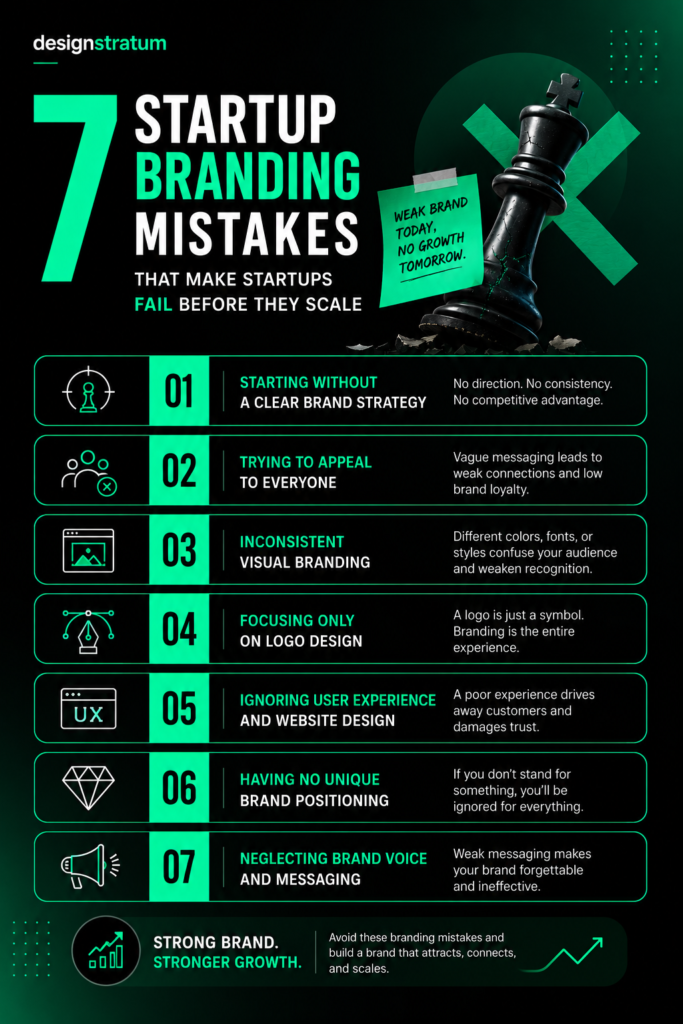
Startup branding plays a critical role in business success. The seven mistakes discussed in this guide, lacking strategy, targeting everyone, inconsistent visuals, focusing only on logos, ignoring user experience, weak positioning, and poor messaging, can significantly limit growth.
Strong branding builds trust, improves customer acquisition, and creates differentiation in competitive markets. Additionally, it helps startups communicate value more effectively to both customers and investors.
The most successful companies view branding as a strategic investment rather than a design project. By building a strong foundation early, startups can create memorable brands that support sustainable growth and long-term success.